Chemical Etching
Metal Fabrication
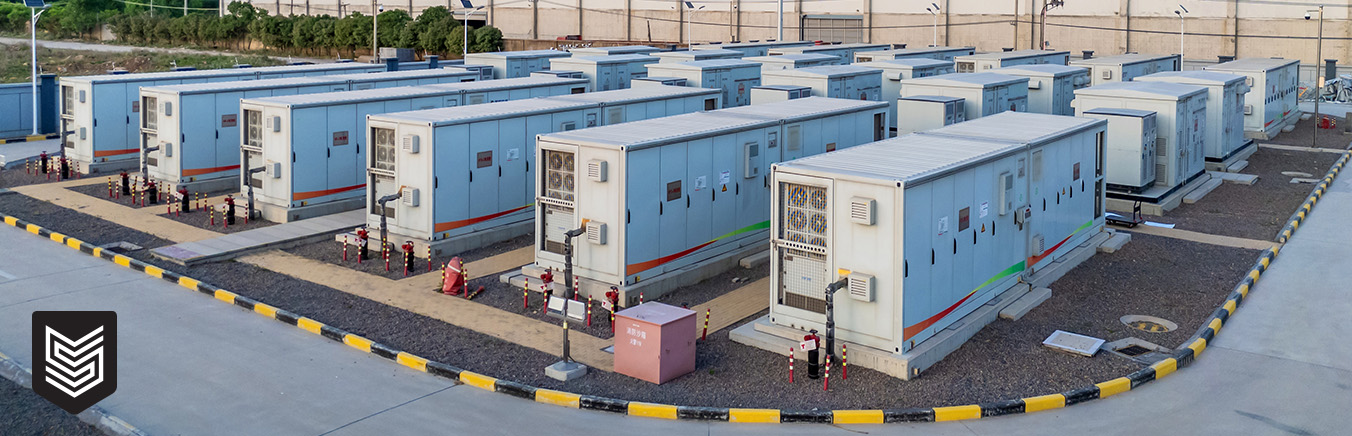
Utility-scale battery energy storage systems require thousands of battery cells packed into industrial enclosures. While chemical formulations and control software capture headlines, physical hardware dictates long-term asset survival. A single grid storage facility contains tens of thousands of electrical connections, cooling passages, and structural mounts.
Operating under decades of thermal cycling, ambient vibration, and constant power transfer tests the limits of every part. Component failure at this scale degrades efficiency and creates localized safety hazards. Precision manufacturing delivers the dimensional stability that is needed to survive 20-year service lifespans.
High-current paths rely on copper and aluminum busbars to link cells, modules, and power conversion equipment. At scale, electrical resistance generates heat loss. Contact resistance at a single connection point might seem minor. However, multiplying a minor surface variation or dimensional defect across ten thousand terminals causes substantial system-level losses.
Maintaining consistent material thickness and flat contact faces keeps connection resistance low. Edge conditions matter just as much. Burrs on stamped or cut interconnects create high-voltage stress points, localized arcing risks, and assembly interference. Precision-etched interconnects eliminate edge burrs entirely while maintaining exact hole locations and slot geometry. Thin, complex interconnects that feature intricate tabs or current-distribution patterns benefit directly from non-mechanical cutting methods. Clean, flat contact pads preserve electrical continuity and prevent localized hot spots across massive battery racks.
Stationary storage packs generate intense internal heat during peak discharge cycles. Liquid cooling hardware must pull heat away evenly to prevent accelerated cell degradation. Liquid cold plates rely on internal fluid networks to maintain uniform module temperatures.
In high-performance fluid applications, these components share engineering principles with PCM channel plates used in Printed Circuit Heat Exchangers (PCHEs). Similar micro-scale fluid dynamics appear in Micro Channel Heat Exchangers (MCHEs). MCHEs often rely on hydroforming because that process produces smaller, more precise channels than traditional stamping. However, Photochemical Machining (PCM) delivers superior design agility for thin, multi-layered cold plates.
PCM creates detailed flow paths, manifolds, and alignment features in thin sheet metals without introducing mechanical stress. Phototooling costs remain low, letting engineers iterate channel layouts quickly during thermal validation. Etched flow channels yield burr-free fluid passages with zero heat-affected zones, maintaining consistent flow distribution and pressure drops across the entire rack.
Grid storage hardware extends beyond primary electrical and cooling pathways. Hundreds of secondary metal parts hold modules in place, shield sensitive electronics, and maintain physical isolation. Key components include:
While these parts appear secondary, dimensional variations compromise system assembly. A thick shim skews module alignment. A distorted retainer creates a sealing gap that allows moisture ingress. Material selection must account for structural load, galvanic compatibility, and resistance to corrosive outdoor environments.
Not every component in a grid storage system requires micron-level accuracy. Overspecifying tolerances increases production costs unnecessarily. Instead, manufacturing tolerances must match component function. Critical features demand tight control over material thickness, hole positioning, channel depth, and surface flatness.
Consistency across a production run often matters more than chasing a razor-thin tolerance on one isolated part. Automated assembly lines need every piece to drop into place smoothly without jamming fixtures or throwing off alignment sensors. Off by two thousandths of an inch? That sounds harmless on an engineering print. But multiply that variation across thousands of battery modules, and tolerance stack-up catches up with you fast. You wind up with binding during automated assembly, uneven physical compression on the cells, and unpredictable coolant flow through the racks.
 Quality Assurance and Safety Frameworks
Quality control plans for grid components require systematic verification at every stage. Essential quality measures include incoming material certifications, thickness checks, optical dimensional profiling, and surface cleanliness monitoring. Statistical process control tracks production stability over long manufacturing runs.
Safety evaluations like UL 9540A measure thermal runaway propagation at the complete system level. Precision components support the physical containment strategy, but individual metal parts should not be labeled “UL 9540A compliant.” True compliance applies to the fully assembled storage system. Precision components provide the dimensional consistency needed to meet those rigorous system-level safety standards.
Sourcing precision components domestically offers distinct operational advantages over long international supply chains. Domestic production shortens engineering feedback loops during prototype testing. It speeds up design revisions and reduces exposure to ocean freight delays.
Domestic manufacturing also intersects with federal incentives under the Inflation Reduction Act (IRA). Eligible grid-scale storage projects may qualify for domestic content bonus credits.
However, buying a single domestic metal part does not automatically qualify a project for tax credits. The IRS evaluates domestic content compliance at the total project level based on component cost structures, steel and iron rules, and manufactured product classifications. Partnering with domestic precision suppliers simplifies supply chain traceability and supports broader project qualification goals.
Scaling grid energy storage requires uncompromising hardware reliability. High-density battery packs depend on predictable electrical paths, uniform cooling, and tight mechanical alignment to survive decades in the field. Photochemical machining offers the geometric freedom, edge quality, and repeatable accuracy required for thin precision metal components. By matching manufacturing methods to functional performance requirements, energy storage developers build safer, more efficient grid infrastructure.

4020 Jeffrey Blvd. | BUFFALO, NY 14219
P: (716) 821-9393 / (800) 875-1093
Website by Luminus