Chemical Etching
Metal Fabrication

Moving from a prototype to a production-ready design is rarely a straight line. Early builds often prove out geometry or function, but scaling requires a different level of control. The process must shift from “can we make it once?” to “can we make it thousands of times, with the same quality, on schedule, and at cost?” Photochemical machining (PCM) provides critical advantages for this transition. Its low tooling costs and design flexibility allow quick changes during development and enable repeatability once volumes rise.
Yet no process stands alone. Achieving scalability demands disciplined management that supports growth without creating new risks. Five areas matter most for this transition: material sourcing, inventory management, surface finishing, final assembly, and packaging and shipment. Let’s look at each one in detail.
The shift to volume starts with material. While prototypes can rely on distributor stock, production runs demand stronger supply chains and long-term consistency. Alloys such as 301 stainless, beryllium copper, and Invar must arrive in the correct thickness, temper, and surface finish. Certifications and traceability become central at this stage, while decisions about domestic versus offshore sourcing shape both lead times and oversight.
Material strategy flows directly into inventory management because inventory practices must evolve as volumes grow. Prototypes can lean on just-in-time deliveries, but scaled production benefits from a hybrid approach. Buffers keep production steady, while segregation and traceability protect against errors in handling similar-looking alloys. Physical storage and handling systems also play a larger role as demand rises.
 3. Surface Finishing
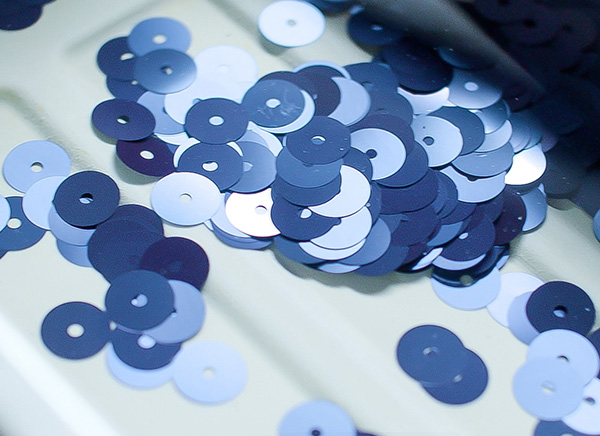
Surface finishing is often where small-scale success struggles at volume. Coatings such as plating or passivation must meet performance requirements consistently across thousands of parts. Geometry adds complexity, as thin and finely featured parts behave differently in plating baths. Vendor capacity also matters; relying on a single source creates bottlenecks that can stall production.
Assembly is the stage where etched parts meet the broader product. Early builds can rely on hand-fitting and manual inspection, but neither approach scales. Repeatable integration, guided by Design for Assembly (DFA) principles, supports reliable performance at volume. Quality control must also evolve to balance speed with accuracy.
The last step often decides whether the scale succeeds or fails. Packaging and logistics determine how well parts survive the trip from factory to customer. Delicate geometries and sharp edges demand protective packaging, while high-volume shipments require scalable logistics strategies. Traceability built into packaging ensures customers can manage parts efficiently once they arrive.
 Bringing It All Together
PCM simplifies the transition from prototype to volume. The process avoids the cost of hard tooling, maintains crisp features, and supports rapid edits, all of which reduce early risk. But true scalability is never about the process alone. It comes from making disciplined choices across every phase of production. Material sourcing, inventory management, finishing, assembly, and shipment each carry their own levers for speed, quality, and cost.
PCM supports scale because the process is stable and quick to adapt. Photo-patterned resist and controlled chemistry deliver consistent features at thin gauges, which supports multi-up panelization and cuts rework. Low tooling cost keeps iteration practical while design data matures. Flat parts exit the process without heat-affected zones, so thin sections stay true and fine features remain clean. That stability helps downstream steps: fixturing, plating uniformity, automated inspection, and final pack.
Switzer’s approach ties these threads together. Decades of process tuning guide how jobs are quoted, suppliers are chosen, fixtures are built, and packaging is specified. The result is a line that moves. Parts arrive with the right pedigree. Finishes repeat. Inspection plans scale. Packaging protects geometry. Freight lands on time. Those outcomes start as quiet choices made long before production peaks.
4020 Jeffrey Blvd. | BUFFALO, NY 14219
P: (716) 821-9393 / (800) 875-1093
Website by Luminus