Chemical Etching
Hydrogen Fuel Cell
Metal Fabrication
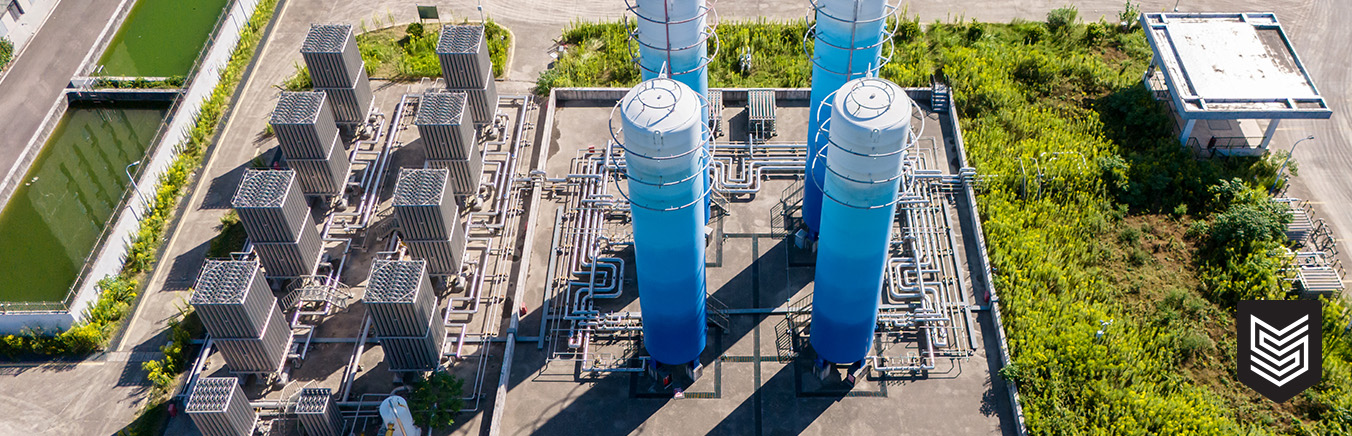
In recent years, the use of renewable energy sources to produce green hydrogen through electrolysis has become increasingly popular as a means of creating a low-carbon fuel. Although this method has many advantages, such as being a clean alternative to traditional fuels and a potential solution for reducing our reliance on fossil fuels, there are still some barriers preventing broader market adoption of this technology. These barriers include low energy efficiency and high costs associated with current electrolyzer systems, along with challenges related to scaling production capabilities. Researchers are working to address these challenges by developing new technologies, including Proton Exchange Membrane (PEM), Anion Exchange Membrane (AEM), and solid oxide (SO) systems; they have also made significant progress in utilizing non-precious-metal catalysts and developing microbial electrolysis cells (MECs).
However, an advanced catalyst is only as good as the physical system around it. True efficiency gains require a look at the physical stack architecture, specifically the flow field and bipolar plates. These components regulate fluid flow, electricity, and heat. Advanced manufacturing transforms these plates from simple dividers into active drivers of system performance.
In high-performance energy systems, these components are frequently engineered as PCM channel plates. While these PCM channel plates are used primarily in Printed Circuit Heat Exchangers (PCHEs), their internal fluid dynamics map directly onto hydrogen electrolyzers. Engineers also deploy this class of technology in Micro Channel Heat Exchangers (MCHEs). For MCHEs, designers often look to hydroforming because this manufacturing method produces smaller, more precise channels than traditional stamping. When scaling up electrolyzer stacks, Photochemical Machining (PCM) emerges as the optimal choice for fabricating complex fluid pathways without damaging the base metal.
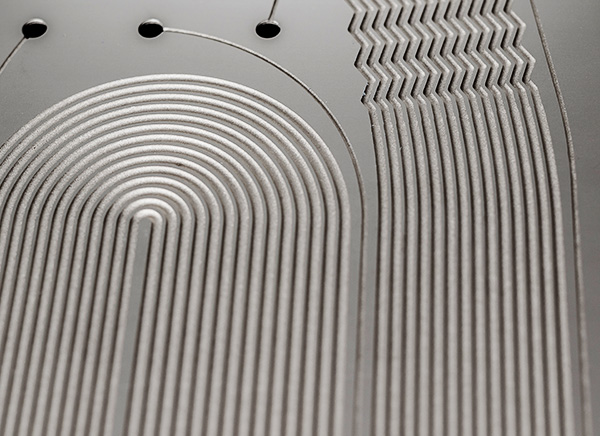
Channel pattern geometry determines how water moves across the active area of an electrolyzer. Engineers will typically choose between serpentine, interdigitated, and pin-type configurations. The goal is to maximize contact between the water and the catalyst layer.
Poor distribution creates localized dead zones. These dead zones starve the membrane, which increases electrical resistance and speeds up material degradation. Maintaining a tight tolerance on channel width, depth, and wall geometry across the entire plate surface is critical. This spatial uniformity keeps current density stable. It minimizes overpotential losses, meaning less energy is wasted as heat during the reaction.
Managing two-phase flow is a major engineering hurdle on the PEM anode side. As water splits, oxygen gas forms rapidly. If these oxygen bubbles linger, they block the catalyst surface area. This blockage increases mass-transport resistance and reduces the cell’s efficiency. The plate’s channel aspect ratio, cross-sectional profile, and land width dictate how fast these gas slugs evacuate. Tapered or half-etched channel profiles create a localized pressure gradient. This gradient actively assists bubble detachment from the electrode surface.
Additionally, narrowing the lands reduces the physical distance a bubble must travel before it reaches an open channel. Faster evacuation keeps the catalyst fully active and clear of obstruction.
Mass and volume matter when scaling up hydrogen production systems. Thinner plates offer several direct benefits. They shorten the current path through the stack, which reduces ohmic losses. They also increase the overall power density per unit of stack height, allowing for more compact utility installations.
Fabricating thin plates with traditional stamping is difficult. Stamping thin metal foils often causes physical distortion, ripples, and edge burrs. PCM holds a natural advantage here. The chemical removal process is entirely stress-free and burr-free. It produces perfectly flat plates even at exceptionally thin gauges, maintaining structural integrity without mechanical defects.
 Complex Channel Architectures
Modern stack designs require geometries that traditional manufacturing cannot achieve. Variable-depth channels and internal micro-features are becoming standard requirements for high-efficiency systems. Engineers use tiny dimples, internal ribs, or textured surfaces inside the channels to disrupt boundary layer flow. This disruption improves mass transport and prevents stagnation. Stamping cannot replicate these fine features at production volumes.
While academic papers frequently discuss 3D printing for these complex architectures, it remains too slow and expensive for mass manufacturing. PCM bridges this gap. It delivers the geometric freedom of additive manufacturing at a commercial scale and cost, making advanced fluidic designs viable for large production runs.
The interior of a PEM electrolyzer is a brutal environment. The anode side operates under highly acidic and strongly oxidizing conditions. Plates must survive these factors without degrading or leaching metal ions into the system.
PCM processes work cleanly across the specialized materials specified for these stacks, including titanium, 316L or 904L stainless steel, and various nickel alloys. Traditional cutting or stamping introduces residual mechanical stress along the cut edges. This stress creates prime initiation sites for stress-corrosion cracking. Because chemical etching involves no mechanical force, it leaves no residual stress. The resulting clean, etched surface supports the uniform formation of a protective passive oxide film.
Total stack efficiency is an aggregate property. A single underperforming cell drags down the performance of the entire system. If channel depth varies by even ten percent from one plate to the next, it creates a performance spread across the cells. This cell-to-cell variation leads to uneven current distribution and localized overheating.
Achieving strict consistency across thousands of plates is mandatory for commercial viability. PCM uses digital tooling that does not wear down over time, unlike mechanical dies or punches. Every single plate in a production run matches the original specification precisely. This repeatable accuracy eliminates cell-to-cell variance, protecting the longevity and efficiency of the complete electrolyzer stack.
Scaling green hydrogen requires moving past laboratory victories. High-efficiency electrocatalysts need matching advancements in stack hardware to succeed. Advanced manufacturing methods like PCM turn flow field and bipolar plates into highly efficient assets. By optimizing channel geometry, plate thickness, and material consistency, these plates remove traditional performance bottlenecks. The future of clean energy relies on this exact union of chemistry and mechanical engineering.

4020 Jeffrey Blvd. | BUFFALO, NY 14219
P: (716) 821-9393 / (800) 875-1093
Website by Luminus