Chemical Etching
Heat Exchangers
Metal Fabrication
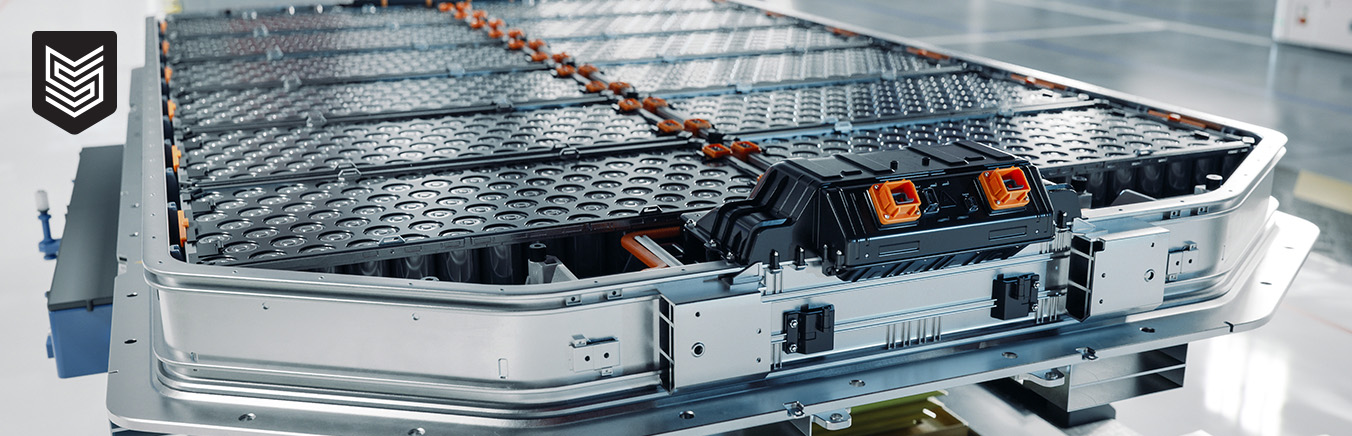
Electric vehicles (EVs) continuously apply pressure to achieve greater energy density and faster charging – which is accomplished by applying remarkable currents into the battery pack. The downside of introducing all this energy is that it generates a lot of heat. If there is no thermal management, the battery pack gets cooked, which leads to chemical breakdown of the cells, aging of the pack, and poses certain fire hazards. This means that thermal management is not the last part of the project, as it is essential right from the start.
To pull that heat out, engineers turn to channel cooling plates tucked right against the cells. Calling them “grooved metal sheets” misses what they actually do; these are precision heat exchangers. The fluid loops inside these plates borrow the same micro-scale thermal principles as PCM channel plates used in Printed Circuit Heat Exchangers (PCHEs) and Micro-Channel Heat Exchangers (MCHEs). While MCHEs often use hydroforming instead of traditional stamping to get smaller, tighter channels, Photochemical Machining (PCM) gives you the best mix of design freedom, accuracy, and low upfront cost for flat battery cooling plates.
Channel cooling plates regulate battery temperatures by moving liquid coolant through internal channels positioned directly against cells or modules. Heat transfers out of the cell casing, moves through a thermal interface material, enters the metal plate, and flows away in the fluid loop.
Active fluid cooling keeps cells inside their ideal operating window. Stable temperature maintains chemical degradation of heat in check, increasing pack life and maintaining constant power output. In addition, it allows drivers to use high-powered fast charging without overheating batteries. Controlling peak heat reduces the risk of thermal runaway. If a single cell fails, a reliable cooling plate absorbs excess heat to stop fire from spreading to neighboring cells.
Cooling plates are actually an integral part of the entire safety system that combine temperature sensors, battery management software, electrical protections, thermal insulation, vents, and some physical barriers.
Controlling the average temperature of a battery pack is not enough. Localized temperature differences between individual cells create massive operational problems. When some cells run hotter than others, they age faster and lose capacity at a higher rate.
Localized degradation creates uneven capacity across the pack. Hotter cells develop higher internal resistance. Because the battery management software protects the weakest cell, it limits total available power for the whole vehicle. Over time, this imbalance reduces usable pack capacity, forces earlier power derating during heavy acceleration, and slows down charging speeds. Poor thermal distribution eventually forces premature pack replacement long before the healthy cells wear out. A well-designed cooling plate fixes this by routing fluid where heat generation peaks, keeping temperatures even across every cell in the module.
 Key Trade-Offs in Cooling Plate Architecture
Designing a cooling plate requires balancing fluid dynamics, heat transfer, strength, and weight. Channel geometry directly governs heat removal efficiency and fluid resistance. Engineers must balance several competing variables:
Narrow channels increase contact area and improve heat transfer rates. But narrow channels choke fluid flow, driving up pumping needs. Larger channels lower pressure drop, but they can result in lower thermal performance and uneven cooling.
Material selection creates similar trade-offs. Aluminum dominates the EV industry because it is light, cheap, and conducts heat well. Stainless steel offers higher mechanical strength and superior corrosion resistance, though its lower thermal conductivity limits where you can use it. Copper offers exceptional thermal performance, but its weight and cost limit its use to targeted, high-heat spots.
Photochemical Machining (PCM) gives engineers a fast, flexible manufacturing path for developing advanced cooling plate designs. PCM uses chemical etchants to dissolve complex channel layouts, manifolds, and alignment features into thin metal sheets. Those patterned sheets are then bonded together to create fully enclosed coolant passages.
Unlike mechanical cutting or laser ablation, PCM creates stress-free, burr-free features without heat-affected zones. The process allows for partial-depth etched channels with precise depth control across the entire plate. Because PCM relies on digital artwork rather than physical dies, phototooling costs stay low.
This digital workflow lets engineers iterate quickly during early design phases. Product development teams can modify channel widths, test manifold layouts, and evaluate different flow paths simply by updating CAD files. Testing multiple channel configurations in real-world validation setups prevents costly tooling changes later in the program. Once settled on a design, PCM scales seamlessly from prototype builds into full production without changing manufacturing methods.
Cooling plates are sophisticated heat exchangers that directly dictate battery system performance, safety, and operational longevity. Achieving optimal thermal management depends on the tight interaction between channel geometry, plate material, fluid flow rates, pressure drop, thermal interface materials, and leak-proof joining methods. Relying on simple stamped patterns limits design freedom and delays development cycles when changes are needed.
By utilizing Photochemical Machining, engineering teams gain the geometric flexibility required to refine complex fluid channels quickly. A well-designed channel cooling plate helps control peak temperatures and minimize cell-to-cell temperature variations. This targeted thermal control preserves battery performance, protects fast-charging capabilities, extends service life, and reinforces the battery pack’s complete safety architecture.

4020 Jeffrey Blvd. | BUFFALO, NY 14219
P: (716) 821-9393 / (800) 875-1093
Website by Luminus