Chemical Etching
Metal Fabrication
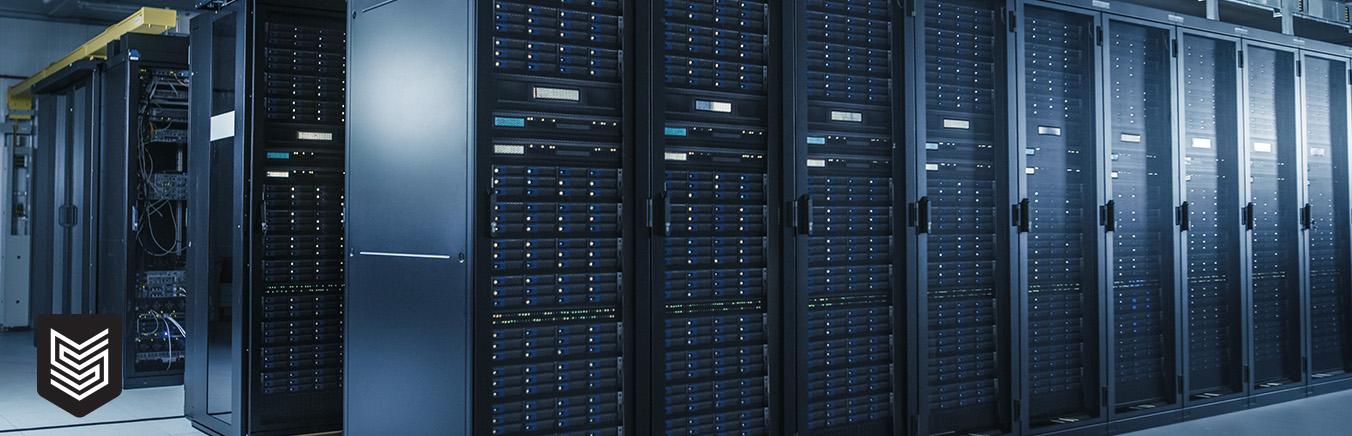
Data centers are transforming. Modern AI applications and high-performance computing (HPC) demand massive amounts of power. This energy translates directly into heat. Traditional cooling methods are failing to keep up. Most legacy facilities rely on air cooling to manage thermal loads. This approach uses large fans and Computer Room Air Conditioning (CRAC) units. Air cooling works well for lower densities. However, as rack densities climb toward 100 kW, air reaches its physical limit. Air has low thermal conductivity. It requires large volumes of flow to move heat away from high-density chips. This creates a bottleneck for hyperscale facilities and AI clusters.
Engineers now look to liquid cooling as the primary solution. Liquid is a much better heat conductor than air. It carries heat away more efficiently and with less energy. Microchannel heat exchangers (MCHEs) sit at the center of this shift. These components allow for direct-to-chip cooling and highly efficient heat transfer. They provide a path to sustainable growth for data centers. Using MCHEs reduces the cooling system’s energy footprint. It also allows operators to pack more computing power into smaller spaces. This transition is no longer optional for the industry. It is a technical necessity.
Air cooling is inefficient at scale. It consumes a significant portion of a data center’s total energy. Fans must run constantly to move air across heat sinks. This creates a high Power Usage Effectiveness (PUE) ratio. In a high-density environment, air cooling struggles to reach every hot spot. This leads to thermal throttling and hardware failure.
Fin-and-tube heat exchangers represent the legacy approach to liquid cooling. These units use copper or aluminum fins attached to tubes. They are bulky and heavy. Fin-and-tube designs have a limited surface area relative to their volume. This limits their ability to dissipate heat in tight spaces. They also suffer from uneven fluid distribution. This can lead to localized overheating within a cooling loop.
MCHEs solve these problems by increasing the surface area density. A microchannel design puts more surface area into a smaller footprint. This allows for more contact between the cooling fluid and the heat source. The result is a much higher heat transfer coefficient. MCHEs are lighter and more compact than fin-and-tube models. They scale effectively for the highest-density applications.
Efficiency in thermal management depends on the ratio of surface area to volume. MCHEs excel here. By using channels measured in micrometers, these heat exchangers maximize the interface between the metal and the fluid. Smaller channels create a shorter path for heat to travel from the wall to the center of the fluid stream. This reduces thermal resistance.
Fluid dynamics also plays a role. In traditional large-scale piping, flow can be unpredictable. MCHEs allow for precise control over flow fields. Engineers can design serpentine or parallel paths to optimize cooling. This leads to a more uniform temperature across the entire plate. It eliminates the “hot spots” that plague traditional cooling architectures.
Lower pressure drop is another critical factor. A well-designed MCHE moves fluid with minimal resistance. This reduces the work required by pumps. Improved system efficiency follows. This helps data center operators meet strict sustainability targets. Lower water usage is also a benefit. High-efficiency liquid loops require less makeup water than traditional evaporative cooling towers.
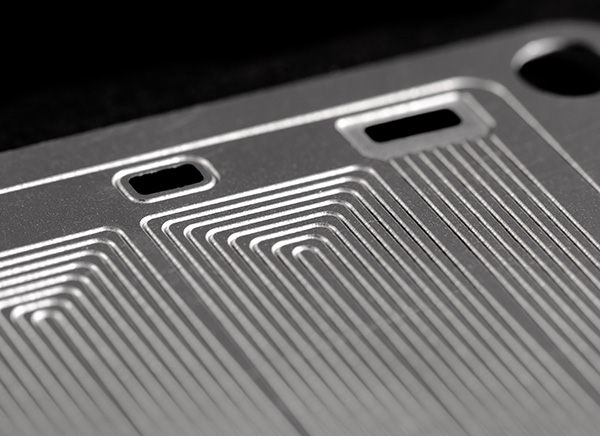 Why Photochemical Machining Is the Solution
Building an effective MCHE requires extreme precision. The geometry of the channels dictates the performance of the entire system, so traditional manufacturing methods like stamping or laser cutting often fall short. Stamping puts physical stress on the metal. It can cause burrs or deformations that disrupt fluid flow. Laser cutting introduces heat-affected zones. This changes the molecular structure of the material and can lead to thermal distortion.
Photochemical machining (PCM) is a different approach. It uses a chemical etching process to remove metal. PCM is a non-contact, non-thermal process and does not introduce mechanical stress or heat into the part. This ensures the internal flow paths remain clean and smooth. Surface finishes are superior to machined or stamped parts.
Consistency is vital for data center components. Every MCHE plate in a stack must be identical. Even small variations in channel width can cause flow imbalances. PCM maintains tight tolerances across the entire surface of the plate. This level of repeatability is difficult to achieve with mechanical tools that wear down over time. Chemistry does not wear out.
PCM also supports rapid prototyping. Engineers can test different channel geometries without investing in expensive hard tooling. A digital design can be converted into a photo mask in hours. This speed allows for faster iteration during the development phase. Once a design is finalized, PCM scales quickly to high-volume production. It is a cost-effective way to produce complex metal components.
The demand for computing power will continue to rise. Liquid cooling and MCHEs are the future of the infrastructure. However, the performance of these systems depends on the quality of the heat exchanger. The channel geometry must be executed perfectly to unlock the benefits of the technology.
Choosing the right manufacturing partner is essential. A partner must understand the relationship between fluid dynamics and metal fabrication. They need to provide clean, burr-free paths for high-performance fluids. Precision in the micro-scale leads to reliability at the macro-scale.
Switzer provides the engineering expertise needed to realize these designs. Our PCM process delivers the accuracy required for next-generation thermal management. We help streamline the transition from prototype to full-scale production. MCHEs are the key to cooling the cloud. Executing their complex geometries is what we do best.
4020 Jeffrey Blvd. | BUFFALO, NY 14219
P: (716) 821-9393 / (800) 875-1093
Website by Luminus