Chemical Etching
Metal Fabrication
Manufacturers have long sought to strike a balance between speed, cost, and quality. The Just-in-Time (JIT) production model attempts to create that balance by cutting excess inventory and streamlining material flow.
Yet for all its efficiency, JIT is not without risk. The approach demands flawless coordination and flexible manufacturing partners—a challenge that can make or break a production program.
At its best, JIT eliminates waste, materials don’t sit on shelves, and work-in-progress doesn’t pile up. By keeping only what’s necessary to meet short-term demand, manufacturers reduce overhead and improve cash flow. Production schedules become leaner, and teams can pivot faster to accommodate real-time shifts in orders.
For large-scale manufacturers with stable supply chains, the payoff can be substantial. The system minimizes storage costs and keeps product flow steady. When everything runs smoothly, JIT supports a continuous rhythm that drives higher output with fewer resources.
The leaner a system becomes, the more fragile it gets. JIT leaves very little room for error. A supplier delay or raw material shortage can halt an entire line. Even minor disruptions, like transport delays or a design change, can ripple through production schedules. Smaller companies often feel this risk more sharply, as they depend on fewer suppliers and have limited resources to absorb setbacks.
Inventory buffers disappear under JIT. If a single component runs late, deadlines get affected and customers notice this. Recovery isn’t as simple as adding shifts or pushing output. Every part of the schedule is interconnected, and regaining lost time is costly.
That’s why successful JIT programs rely on manufacturing partners who can react quickly and adjust without sacrificing precision. And it is here where Switzer’s Photochemical Machining (PCM) process makes a tangible difference.
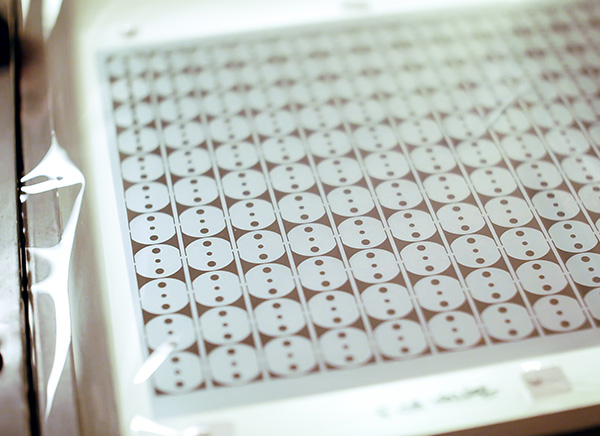 PCM removes material through chemical action rather than mechanical force. It produces detailed, high-precision metal parts without the tooling constraints found in stamping or punching. The process is clean, accurate, and repeatable, ideal for customers who work on frequent design updates or low-volume production runs.
Below are three key ways PCM helps JIT operations:
Traditional tooling can be a bottleneck in JIT environments. A design change in stamped parts often means modifying or rebuilding a die. It’s a process that can take weeks and cost thousands. PCM eliminates most of that delay.
With PCM, the “tool” is a phototool—a transparent film that defines the pattern to be etched. Creating or revising it takes hours, not weeks. Costs stay in the hundreds, not tens of thousands.
That agility aligns perfectly with JIT principles. When design revisions occur close to production, a manufacturer using PCM can respond immediately. The speed and affordability of PCM tooling mean small batches or revised runs don’t require major investment or long lead times.
JIT relies on smaller, more frequent production runs. That’s where mixed-SKU nesting, Switzer’s practice of combining multiple part types on a single sheet, becomes invaluable. In traditional processes, each SKU requires a separate setup and dedicated tooling. That means more sheets, more waste, and longer cycle times. With PCM, multiple part designs can be etched on the same sheet using shared setups.
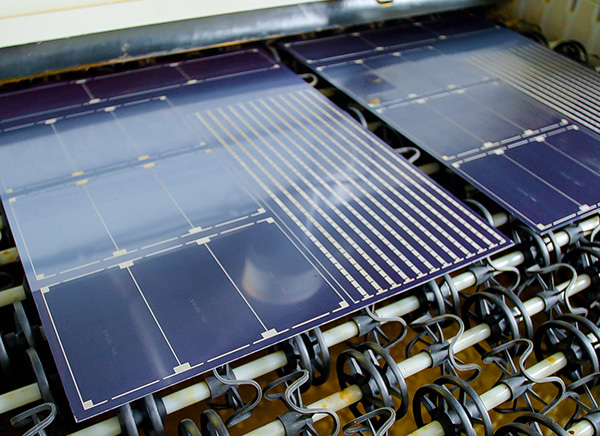 Take the example of three SKUs needing 500 pieces each. Separate runs would use twelve sheets. Mixed-SKU nesting reduces that to eight (a 33% improvement). Scale the order to 1,000 pieces per SKU, and you still cut sheet use by nearly 30%!
This approach slashes setup time and material waste, both of which weigh heavily on low-volume costs. Every setup requires test sheets and inspection cycles. Sharing those across SKUs multiplies the efficiency, and the result is quicker first-article approvals, fewer partial shipments, and faster kit deliveries. For JIT and prototyping, where time and flexibility matter, PCM’s ability to nest parts together streamlines development and accelerates decision-making.
JIT production thrives on timing. Components must move from design to delivery in narrow windows. PCM supports this through its flexible workflow and quick customization capability.
At Switzer, standard alloys and common thicknesses are held in stock. The differentiation happens later, when the phototool is applied. That means one batch of base material can serve multiple customers or SKUs, with the final pattern etched only once orders are confirmed.
This practice shortens lead times and lowers inventory exposure. Manufacturers don’t need to stock customized parts waiting for demand; they can produce on release. The process brings customization closer to shipment, and for JIT adopters, this translates into smoother material planning and faster response cycles.
The precision of PCM fits neatly with the agility demands of JIT. Quick tool changes, multi-design sheet runs, and adaptable material handling all combine to reduce downtime and improve responsiveness. More importantly, they allow manufacturers to keep their lines active while maintaining tight tolerances and consistent quality.
JIT’s core challenge is variability, and variability is exactly what PCM absorbs well. Whether a customer needs a small prototype batch or a recurring low-volume release, Switzer’s approach keeps lead times short and processes stable. The ability to modify designs quickly and cost-effectively adds a safety margin that JIT systems often lack.
By reducing dependence on rigid tooling and lengthy changeovers, PCM aligns with the JIT philosophy of producing only what’s required, exactly when it’s required. It gives program managers control over production pacing without sacrificing precision or profitability.
Switzer’s process bridges that gap. Its speed, precision, and scalability make it ideal for modern JIT strategies. In an industry where timing dictates success, the process gives engineers and managers a critical advantage—the ability to move fast, stay accurate, and keep inventory exactly where it belongs: in motion, not on shelves.
4020 Jeffrey Blvd. | BUFFALO, NY 14219
P: (716) 821-9393 / (800) 875-1093
Website by Luminus