Chemical Etching
Heat Exchangers
Metal Fabrication

Thermal management plays a critical role in hydrogen production and hydrogen-generated power systems. Because of extreme peak load conditions and quick temperature fluctuations during start-up and shut-down operations, heat needs to be controlled safely. The extreme pressure and heat flows associated with this type of application significantly impact not only the performance of an individual piece of equipment but the operation as a whole. It shapes plant efficiency, reliability, and maintenance intervals.
Microchannel heat exchangers (MCHEs) are well suited to these environments. They support strong thermal performance in a compact format and can be engineered for difficult operating conditions. In hydrogen facilities, they are often used in intercoolers, recuperators, lube oil coolers, hydrogen cooling loops, and auxiliary systems where space is limited but heat loads remain high.
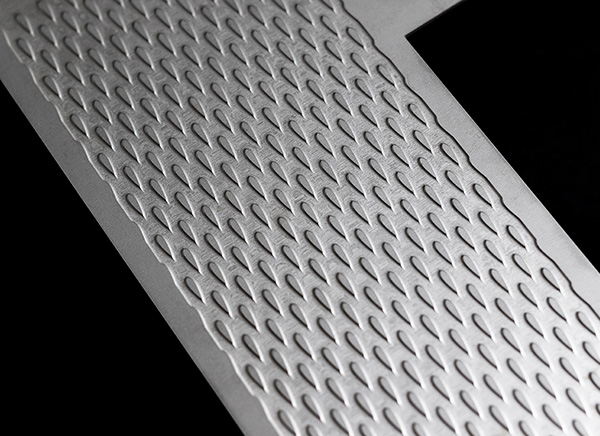
One of the main advantages of MCHEs is their ability to move heat efficiently in a small package. Microchannel designs use many small passages instead of a few large ones. This creates a high surface area relative to volume and shortens the path heat must travel from the fluid to the metal wall.
That matters in hydrogen power systems, where thermal loads can be intense even when equipment space is limited. Electrolyzer skids, for example, often require dense and responsive cooling hardware. Faster heat removal improves temperature control, which helps stabilize operating conditions and protect nearby components from excess thermal stress.
Compact size also supports system integration. Smaller exchangers can reduce overall skid footprint, simplify piping layouts, and free space for controls and safety hardware. In packaged systems, that can make a meaningful difference.
Hydrogen applications often involve pressure, repeated thermal swings, or both. Compression loops, storage systems, and circulation hardware can expose exchangers to demanding mechanical conditions over long operating periods.
MCHEs are a strong fit for these environments. Their small hydraulic diameters and stacked plate construction help create a rigid structure. That rigidity supports performance under pressure and helps reduce the risk of deformation. It also improves durability during repeated heating and cooling cycles.
This is especially important during startup and shutdown. Systems that cycle often are more exposed to fatigue-related wear. A heat exchanger that holds its geometry under those conditions can help support longer service life and more stable performance over time.
Thermal performance is only part of the equation. Flow behavior matters just as much. If fluid does not distribute evenly through the exchanger, hot spots can form, dead zones can develop, and pumping losses can rise.
MCHEs can be engineered for precise flow distribution. That allows designers to guide fluid through detailed passage layouts while keeping pressure drop within target limits. In hydrogen power generation, this is a major benefit.
Electrolysis cooling systems depend on even temperature control across the stack. Steam methane reforming support systems also benefit from stable thermal profiles. Better flow distribution helps reduce localized stress, improve process consistency, and lower parasitic energy losses associated with inefficient circulation.
 4. Material Flexibility for Corrosive and Hydrogen Environments
Hydrogen power generation can involve aggressive operating media. Depending on the application, exchangers may come into contact with humidified hydrogen, electrolytes, reforming byproducts, or other chemically demanding fluids.
That makes material selection a critical design factor. MCHEs can be produced from corrosion-resistant alloys suited to these environments. This allows engineers to match exchanger material to the chemistry of the process without sacrificing the small features needed for thermal performance.
Longer service life is a direct benefit. So is lower maintenance exposure. In industrial systems where unplanned downtime is expensive, durability in corrosive service can have a large effect on plant availability.
Hydrogen systems are still evolving, and many programs move through multiple design rounds before final production. That makes prototyping an important part of exchanger development.
MCHEs support this process well, especially when the manufacturing method allows fast iteration. Design teams may need to revise channel widths, manifold layouts, or flow paths as test results come in. A process that supports those changes quickly can reduce development time and improve decision-making during validation.
This is one reason Switzer’s photochemical machining process stands out. Precision-etched plates allow tight control over channel geometry and feature detail. Tooling costs stay relatively low, and repeatability remains high across prototype and production quantities. That helps teams test, refine, and scale designs with fewer manufacturing-related variables.
Better thermal management improves plant performance at the system level. Efficient heat exchange supports heat recovery, tighter temperature control, and lower thermal stress across connected equipment. Over time, that can reduce failure rates and cut downtime.
These benefits matter in established hydrogen applications such as water electrolysis, cooling, and steam methane reforming. They also matter in newer energy systems. Hydrogen combustion platforms and supercritical CO2 cycles both place strict demands on exchanger hardware due to their operating temperatures and pressures.
In these settings, exchanger quality affects the full operating picture. A stable, repeatable thermal component can help improve uptime, reduce maintenance risk, and support better overall efficiency.
For product engineers, program managers, and project managers, the case for microchannel heat exchangers is practical and clear. MCHEs offer high heat transfer efficiency, compact size, pressure capability, controlled flow distribution, and strong compatibility with demanding process environments. They also support a smoother path from prototype to production.
In hydrogen power generation, those strengths matter. Thermal hardware must perform under pressure, respond to cycling, and fit within tight system layouts. When microchannel designs are paired with precise manufacturing, they become a reliable solution for next-generation power systems that need repeatable thermal performance and long-term durability.

4020 Jeffrey Blvd. | BUFFALO, NY 14219
P: (716) 821-9393 / (800) 875-1093
Website by Luminus