Chemical Etching
Metal Fabrication
During early product development, tooling decisions can either support a process or quietly undermine it. Many metal fabrication methods demand early capital commitments that assume the design is already right. In practice, it rarely is. This gap between design intent and validated performance creates costs that slow programs and strain budgets.
Hard tooling brings an upfront price tag that is easy to measure. What is harder to see is the cost of rigidity. Stamping dies, progressive tools, and machining fixtures lock geometry into steel. Once cut, every change becomes expensive. Each revision consumes time, budget, and attention that could have been spent refining performance.
Time is often the first casualty. Hard tooling can take weeks or months to design, build, and qualify. During that window, engineering work pauses or moves forward on assumptions. If testing later exposes a flaw, the schedule absorbs another tooling cycle. As a result, programs stretch, and launch dates slip.
 Why PCM Changes the Risk Equation
Early-stage designs carry uncertainty by definition. Committing large amounts of funds before validation forces teams to bet early. If the design changes, sunk tooling costs cannot be recovered. Budgets that should fund testing or parallel concepts disappear in rework.
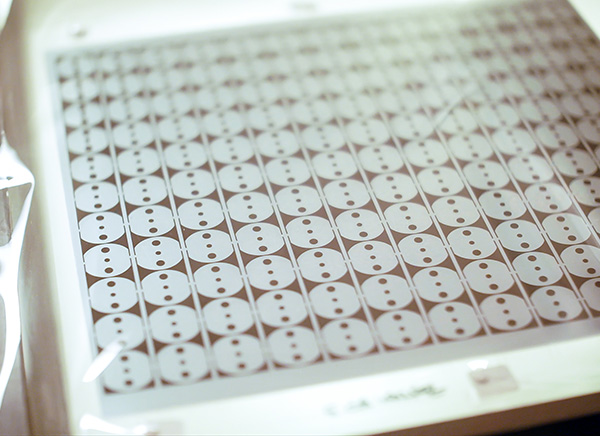
Photochemical machining (PCM) approaches tooling differently. Instead of cutting steel, it uses photo tools to define geometry. These tools are fast to produce and inexpensive to revise. That shift changes how risk is managed during development.
Tooling cost drops dramatically. Photo tools cost a fraction of hard tooling and can be replaced without hesitation. Engineers can validate geometry, flow paths, and fine features without placing a large financial bet. Multiple concepts can be explored without inflating the budget. Capital stays available for later phases, when volumes and requirements are clearer.
Speed compounds the advantage. Photo tools can often be created or revised within 24 to 48 hours. Design changes no longer stall progress. Performance data from testing feeds directly into the next iteration. Orders move forward quickly once changes are approved, without waiting for long tool build cycles.
This pace reshapes engineering behavior. Instead of defending early decisions, teams test them. Assumptions are challenged sooner. Weak ideas fail fast and cheaply. Strong ideas gain confidence through evidence rather than optimism.
Flexibility removes the pressure to lock designs too early. With hard tooling, every revision feels like a setback. With PCM photo tooling, revision is part of the workflow. Features, dimensions, and patterns remain adjustable throughout development. The design evolves alongside understanding, not ahead of it.
This flexibility matters most when requirements are still forming. Emerging technologies rarely arrive with fixed specifications. Performance targets move as systems mature. PCM supports that reality by keeping tooling aligned with learning rather than forcing early commitment.
There are also practical advantages in control and documentation. Photo tools are digital by nature, which simplifies version tracking. Changes are recorded clearly. Engineers know exactly which geometry produced which result. That clarity reduces miscommunication across teams and suppliers. It also supports smoother transitions from development builds to pilot runs.
 Flow-Path Optimization at Development Speed
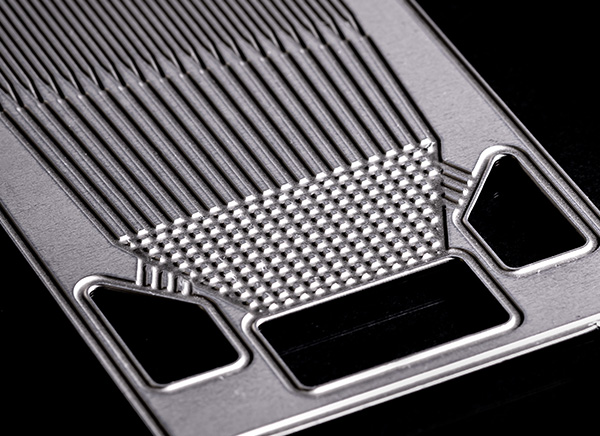
Flow-path design highlights this advantage clearly. Channels, manifolds, and distribution patterns often determine system efficiency. Small changes in width, depth, pitch, or routing can have outsized effects on pressure drop and flow uniformity. Hard tooling makes those changes painful. PCM makes them routine.
Engineers can test several flow concepts in parallel or in rapid succession. One version can prioritize uniformity. Another can minimize pressure loss. A third can explore thermal performance. Each variation uses a revised photo tool rather than a new die. Results come faster, and decisions rest on data.
Applications like hydrogen flow field plates illustrate the impact. Channel geometry in these components directly affects efficiency and durability. Requirements continue to evolve as systems scale. PCM allows designers to refine patterns repeatedly as test results arrive. Optimization happens early, before integration into larger assemblies or stacks.
Shorter iteration loops shorten the entire R&D cycle. Fewer delays mean fewer handoffs and less rework. Program managers gain predictability. Project managers can plan around days instead of months. Engineering teams stay focused on solving problems rather than managing tooling constraints.
Lower tooling cost also reduces the barrier to experimentation. Ideas that would never justify a hard tool become viable. Teams explore alternatives they might otherwise dismiss. That breadth increases the chance of finding better solutions early, when change is cheapest.
This approach does not eliminate the need for hard tooling later. High-volume production still demands durable tools. PCM does not replace those investments. It defers them until the design earns that commitment. By the time hard tooling enters the picture, performance is proven, and geometry is stable.
That timing shift is the real value. Risk moves from the front of the program to the back, where uncertainty is lower. Capital follows the same path. Early stages focus on learning. Later stages focus on scale.
The early-stage flexibility of PCM shifts the balance of risk and investment. Instead of placing large bets on unproven designs, engineers can focus on learning and optimization. The process allows teams to test ideas rapidly, refine complex geometries, and validate performance before major capital is deployed.
Switzer applies this approach to help engineering teams control risk without slowing innovation. By using PCM during early development, customers gain speed, flexibility, and financial discipline before committing to long-term tooling investments.
4020 Jeffrey Blvd. | BUFFALO, NY 14219
P: (716) 821-9393 / (800) 875-1093
Website by Luminus