Chemical Etching
Metal Fabrication
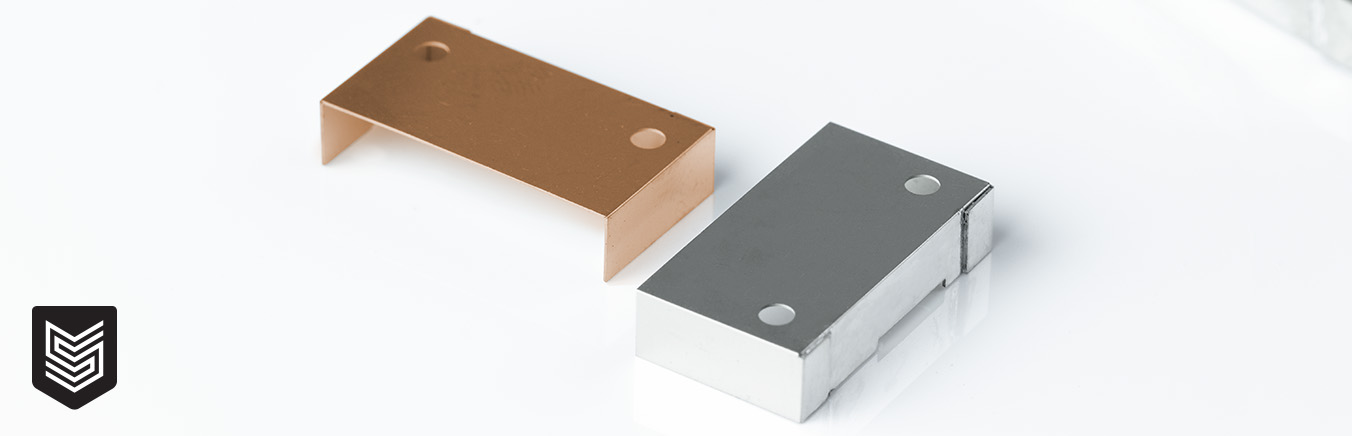
Material choice sets the ceiling for any prototype. Geometry and tolerances matter, but a metal’s response to stress, heat, chemicals, and current determines whether it succeeds beyond the lab. Strength, conductivity, corrosion resistance, weight, and sustainability all play a role, and defining these properties early helps prototypes advance with fewer setbacks.
The cutting method also matters. Photochemical Machining (PCM) removes metal with controlled chemistry and photo-patterned resist. It leaves no burrs or heat-affected zones, keeps thin sections flat, and allows quick edits from CAD to production. This makes PCM ideal for early builds where iteration drives progress. Here, we look at the metals most often used in PCM prototyping.
 Stainless Steel
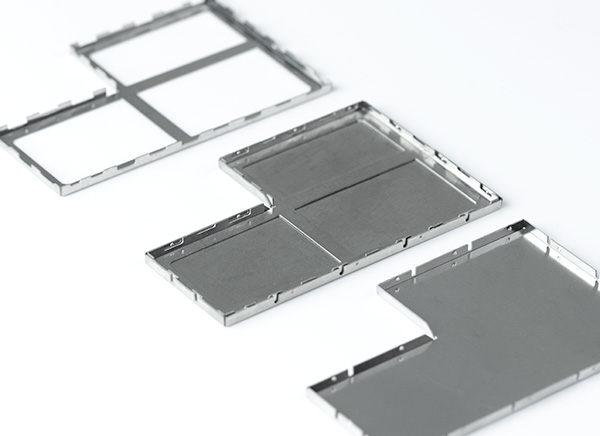
Stainless steel forms the backbone of many PCM parts. It combines strength, corrosion resistance, and a reliable supply. Each grade offers a balance of spring action, durability, or chemical stability.
301: Available from ¼-hard to extra full hard. Its strength can exceed 180 ksi, a staple for spring clips and flexures needing snap and fatigue life.
304 / 316 / 316L: Non-magnetic in the annealed state. Strong corrosion resistance; 316 handles chloride-rich environments. Often used in medical and marine applications. 316L’s lower carbon helps near welds.
17-7PH: Precipitation-hardening grade that exceeds 200 ksi tensile strength after aging. Ideal for springs, diaphragms, and latch components.
430 / 410: These are magnetic options. 430 is ferritic and stable, while 410 can be hardened for wear. Both are useful in sensors, pole pieces, and wear surfaces.
Carbon and spring steels deliver high strength at low cost. They are widely used for parts where energy storage and repeatable force outweigh corrosion resistance.
1074 / 1075 / 1095: All of these have a high strength at a low cost. With heat treatment, tensile strength can exceed 220 ksi. They’re ideal for high-energy springs, pawls, and latch plates where cost pressure is real. PCM yields clean edges that reduce crack starts in cyclic service. Plan heat treatment after etch, with fixtures that protect thin features from distortion.
 Copper and Copper Alloys
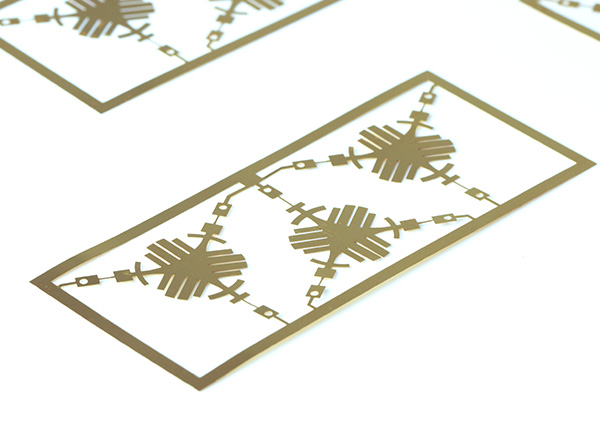
Copper and its alloys are favored where current, heat flow, or compliance matter. They bring strong conductivity and, in some alloys, solid fatigue resistance.
C110 (ETP copper): This material has high electrical and thermal conductivity. It is great for current paths, shielding, and heat spreaders. PCM maintains tight slot widths for controlled impedance and venting. Watch for softness during handling; use carrier frames for thin parts.
Brass (e.g., C260): This material has balanced conductivity, strength, and formability and is useful for EMI gaskets, delicate contacts, and decorative elements that still need stability. Its corrosion performance is generally good in indoor and mild environments.
Phosphor bronze (e.g., C510): Better fatigue behavior than straight copper. Good for small springs, contact fingers, and compliant features that must keep force over time. PCM preserves thin webs that would burr in stamping.
Nickel-based metals excel in harsh environments. They withstand aggressive chemistries, high temperatures, and repeated stress.
Nickel 200/201: Strong corrosion resistance, good thermal stability, and decent conductivity. A fit for harsh chemistries, battery components, and sensor elements. Dimensional stability at temperature helps in precision slots and orifices.
Nickel silver (Cu-Ni-Zn): This has non-sparking, good wear, and better stiffness than many brasses. Common in connectors and decorative mechanical parts needing fine detail.
 Aluminum
Aluminum alloys are lightweight and offer solid corrosion resistance. They are common in prototypes where mass reduction is a design driver.
1100 / 3003: This material is light, corrosion-resistant, and easy to form. It is good for light-duty shields, low-mass carriers, and thermal spreaders where extreme strength is not required.
5052: This has higher strength and better fatigue performance than 1100/3003. It is useful for thin structural members and brackets where weight matters. PCM edges remain clean; anodize afterward to improve wear or corrosion resistance.
To make the right selection for your prototype, bear these key factors in mind:
Prototyping speed comes from clarity. Know the loads, media, temperatures, and signals. Match those to a metal and thickness that the PCM process can hold with repeatable accuracy. Stainless grades cover corrosion and strength. Carbon and spring steels hit force at a low cost. Copper alloys handle current and heat. Nickel stands up to harsh media. Aluminum cuts weight. So, choose deliberately and test early whether the material can carry the design.

4020 Jeffrey Blvd. | BUFFALO, NY 14219
P: (716) 821-9393 / (800) 875-1093
Website by Luminus